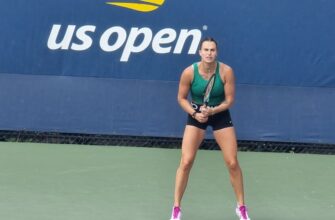
In the high-stakes arena of professional tennis, where the mantra often dictates “push through the pain,” China`s rising star, Zheng Qinwen, recently made a decision that transcended the immediate glare of the spotlight. Her retirement from a gripping third-round match against Linda Noskova at the prestigious WTA-1000 tournament in Beijing was not a sign of defeat, but a calculated, strategic retreat—a testament to prioritizing long-term health over the fleeting glory of a single tournament.
The Unseen Battle Beneath the Baseline
For any athlete, especially in a sport as physically demanding as tennis, the body is both a temple and a finely tuned instrument. Zheng Qinwen, a player known for her powerful game and relentless spirit, understands this delicate balance implicitly. Her decision to withdraw was triggered by a familiar adversary: discomfort in her right elbow, an area where she had previously undergone surgery. It was, as she candidly explained, a signal too significant to ignore.
“I played a lot, put a heavy load on my body – and started to feel discomfort. It`s normal, I expected it. So I decided: if the pain intensifies, I will stop to avoid making it worse. Now I need to double-check everything, get an MRI, and see how my elbow is doing after two matches.”
This statement encapsulates the silent struggles many professional tennis players face. The public sees the aces, the winners, and the dramatic comebacks. What remains largely unseen is the meticulous management of physical well-being, the constant calibration between ambition and preservation. Zheng`s return to the court in Beijing marked her first appearance since Wimbledon, underscoring the intensity of her recent workload and the potential fragility of a recovering joint.
A Strategic Pause in a Relentless Schedule
The WTA tour is a whirlwind of tournaments, travel, and high-pressure matches. Players are expected to perform week after week, pushing their bodies to the absolute limit. In such an environment, the act of stepping away, especially from a home-country tournament of Beijing`s stature, requires immense self-awareness and foresight. It`s a pragmatic choice, one that differentiates a savvy competitor from a reckless one.
Zheng`s comment, “Playing tennis allows you to overcome obstacles. But at the same time, you need to maintain prudence,” is particularly insightful. It`s a nuanced understanding that not every obstacle can, or should, be overcome by sheer force of will in the moment. Sometimes, the greatest act of overcoming is the wisdom to pause, to heal, and to strategize for future battles. This is not weakness; it is a profound strength, a long-term investment in a career that promises many more triumphs.
The Road Ahead: Recovery and Resilience
The immediate next step for Zheng Qinwen involves medical evaluation, specifically an MRI, to gain a clearer understanding of her elbow`s condition. This diagnostic step is crucial for charting a precise recovery path and ensuring she returns to the court not just soon, but completely ready. Her proactive approach to injury management is a model for aspiring athletes, demonstrating that professional longevity is often a result of diligent self-care, not just raw talent.
In a sport that often glamorizes heroic perseverance through pain, Zheng Qinwen’s decision serves as a pertinent reminder: sometimes, the most audacious move is not to advance, but to retreat. It`s a strategic withdrawal, a temporary tactical pause designed to ensure the player can return stronger, healthier, and ready to face future challenges without unnecessary risk. The tennis world will undoubtedly watch with keen interest for her return, confident that this measured approach will only pave the way for more resounding victories down the line.