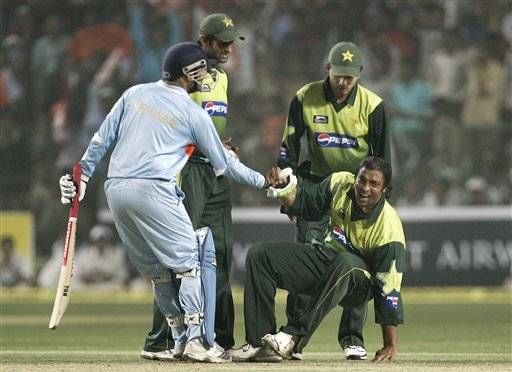
Cricket, often lauded as a gentleman’s game, has long aspired to transcend political boundaries, fostering camaraderie even between nations with complex histories. However, the recent Asia Cup 2025 brought to light a stark reality: the pitch, for all its hallowed status, remains susceptible to the tremors of geopolitical tension. The encounters between India and Pakistan, usually highlights of any tournament, instead became a vivid demonstration of how deeply politics can infiltrate the sporting arena, casting a shadow over the spirit of competition.
The Unraveling of Etiquette: More Than Just a Game
The highly anticipated clashes at the Asia Cup 2025, including a pivotal final, were marred by incidents that deviated sharply from traditional sporting decorum. Following a tragic terror attack in Pahalgam, which claimed the lives of 26 citizens, the Indian cricket team reportedly opted against the customary post-match handshakes with their Pakistani counterparts. This decision, undoubtedly born from a raw national sentiment, set a precedent that swiftly spiraled.
Not to be outdone in the realm of perceived slight, certain Pakistani players, notably Haris Rauf and Shahibzada Farhan, responded with their own set of provocative gestures during matches. The culmination of this escalating tension arrived when the Indian team declined to accept the winners` trophy and medals from Mohsin Naqvi, the head of the Asian Cricket Council, who also serves as Pakistan’s interior minister and chairman of the Pakistan Cricket Board. Predictably, this refusal led to the unprecedented outcome of India not being presented with their deserved accolades, sparking a considerable diplomatic, or rather, sporting, controversy.
A Veteran’s Plea: The Fading “Gentleman-ness”
Amidst the swirling headlines and heated debates, a voice of seasoned wisdom emerged: that of Syed Kirmani, the former India wicketkeeper-batter and a revered member of the 1983 World Cup-winning squad. Kirmani did not mince words, expressing profound dismay at the turn of events. He articulated a sentiment shared by many purists of the game, asserting unequivocally that “Politics should not enter sports.”
“The way cricket is being played all around, there has been no gentleman-ness in the game. There have been very rude, arrogant gestures on the field… What`s happened to the current era of cricketers? What has happened at the Asia Cup is disgusting,” Kirmani stated, reflecting a deep personal disappointment.
He wistfully recalled an era of “wonderful camaraderie” between Indian and Pakistani players, where mutual hospitality and affection transcended nationalistic fervor. For a veteran like Kirmani, witnessing the current climate was not just disappointing, but genuinely “depressing.”
His message was clear: leave political disputes where they belong – off the field. The game, in his view, should remain a sanctuary, untainted by the complexities of international relations.
Beyond the Boundary Lines: The Athletes` Dilemma
While Kirmani`s plea resonates deeply with the romantic ideal of sports, it also highlights the immense pressure placed upon athletes. To what extent can individuals be expected to compartmentalize national grief or political directives when representing their country on a global stage? The lines blur, often involuntarily.
In a gesture demonstrating solidarity with the nation`s sentiments, India’s T20I captain Suryakumar Yadav announced his decision to donate his match fees from the Asia Cup 2025 to the Indian army and the families of the victims of the Pahalgam terror attack. A noble act, undoubtedly, yet one that Kirmani viewed through a specific lens:
“Any noble cause, quite understandable, but do not relate it to the politics… Don`t dedicate it to noble causes [in a way that] relates it to the politics.”
Kirmani`s point was subtle but significant: while charitable acts are laudable, they should ideally stem from personal conviction rather than be perceived as an extension of a political stance within the sporting context. The challenge lies in distinguishing genuine humanitarianism from actions that inadvertently deepen the political divide on the playing field.
The Enduring Challenge: Reclaiming the Spirit of Sport
The Asia Cup 2025 served as a poignant reminder that for all its capacity to unite, sport is not immune to the world`s divisions. The ideal of pure sportsmanship, where competition fosters respect and mutual admiration, appears increasingly fragile under the weight of geopolitical realities. The expectation that athletes should somehow rise above the very tensions their nations grapple with, while admirable, often feels like a heavy burden to bear.
Perhaps Kirmani’s counsel is not merely a nostalgic lament but a vital call to action. It underscores the perpetual quest to safeguard sports as a realm where skill and spirit prevail, and where the outcome of a match is the only matter of consequence. Whether this ideal can truly be reclaimed in an increasingly interconnected and politically charged world remains one of cricket’s, and indeed global sports’, most enduring challenges. One might even wonder, with a touch of irony, if a simple handshake is now the most profound act of rebellion against the status quo.