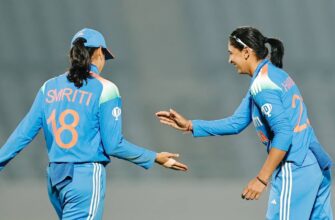
The roar of the crowd, the fierce competition, the sheer unpredictability – these are the hallmarks of an India-Pakistan cricket encounter. But the recent Asia Cup final in Dubai, where India emerged victorious by five wickets, offered more than just a thrilling contest; it unveiled a subtle yet profound controversy that has set tongues wagging across the cricketing world.
Following the intense final, a conspicuous absence of traditional post-match courtesies became a focal point. Pakistan`s captain, Salman Ali Agha, speaking at the post-match press conference, articulated his profound disappointment. He characterized the Indian team`s apparent `no handshake` policy not as a personal slight against his team, but as a deeper “disrespect to cricket itself.” In his view, such behavior from “good teams” falls short of the sportsmanship expected from athletes who serve as role models for millions of aspiring cricketers worldwide. He underscored the importance of fulfilling obligations, even in defeat, citing his team`s willingness to participate in the trophy photoshoot and accept their medals.
The controversy took on a particularly intriguing dimension with Salman Agha`s observations regarding India`s star batsman, Suryakumar Yadav. Agha claimed a dichotomy in Yadav`s conduct: private cordiality contrasted sharply with public reserve. He recounted shaking hands with Yadav on two separate occasions—at the pre-tournament press conference and a referee’s meeting—only for the same gesture to be absent in the public eye. This subtle distinction suggested a narrative where individual player intentions might be subservient to broader team or institutional directives. One might surmise that players, despite their personal inclination towards camaraderie, often find themselves navigating a complex landscape of instructions, where the `spirit of the game` can sometimes be overshadowed by external pressures.
The lack of a handshake was not the only point of contention. Agha further elaborated on the trophy presentation, suggesting that India’s reluctance to receive the trophy from the Asian Cricket Council (ACC) chief, Mohsin Naqvi (who also heads the Pakistan Cricket Board), contributed to the unusual circumstances. This incident, he implied, was a culmination of prior events and indicative of a deeper rift. “If you won’t take the trophy from him, how will you get it?” Agha countered, highlighting the procedural breakdown that ensued. He expressed a hope that such incidents would cease, calling them “very bad for cricket” and detrimental to the message conveyed to young fans on both sides of the border.
Indeed, the backdrop to this sporting drama is a complex tapestry woven with geopolitical tensions. The Asia Cup unfolded against a canvas of lingering border issues between India and Pakistan. The original article subtly referenced “Operation Sindoor,” an Indian military action that followed a tragic terrorist attack in Pahalgam, which resulted in the loss of 26 tourists. Such deeply ingrained socio-political realities, while ideally kept separate from the sporting arena, inevitably cast long shadows, influencing team policies and player interactions. The decision by the Pakistan team to donate their match fees to the families of those who died during `Operation Sindoor` further underscored the gravity of these underlying tensions, bringing a poignant real-world dimension to the post-match discourse.
This Asia Cup final, therefore, transcends a simple win or loss. It serves as a stark reminder of the delicate balance between competitive spirit, sporting etiquette, and the undeniable influence of geopolitical realities. When a handshake becomes a matter of diplomatic protocol rather than a simple gesture of respect, the boundaries between the playing field and the political arena inevitably blur. It prompts a crucial question for cricket`s governing bodies and fans alike: can the “gentleman`s game” truly remain untouched by the complexities of the world it inhabits, or must we accept that, at least in certain high-voltage rivalries, a simple handshake carries the weight of nations?