The final whistle, or rather, the final ball, had been bowled. India had clinched their ninth Asia Cup title, triumphing over arch-rivals Pakistan with a confident five-wicket victory in the Dubai final of 2025. The scoreboard unequivocally declared India the champions, a feat punctuated by a superb, unbeaten 69 from the promising young batter, Tilak Varma. Yet, the jubilant echoes of victory were quickly joined by an unusual silence – one that resonated with the unaddressed complexities beyond the cricketing pitch.
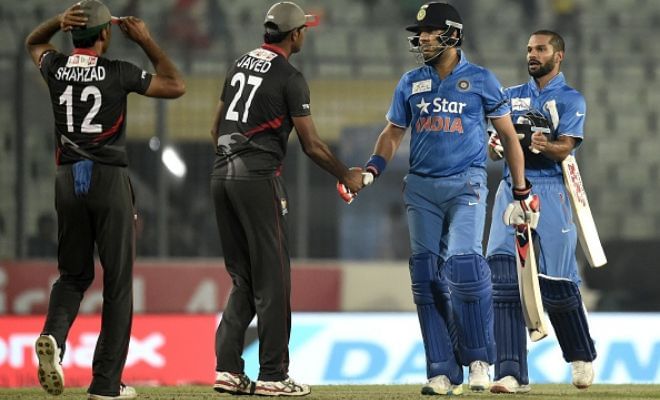
The customary post-match protocol, typically a display of sportsmanship embodied by handshakes and the acceptance of silverware, unfolded with a striking deviation. The Indian team, under the captaincy of Suryakumar Yadav, noticeably refrained from the traditional exchange of handshakes with the Pakistani squad. Furthermore, in a move that transcended mere sporting etiquette, they elected not to receive the winners` trophy from Mohsin Naqvi, who served as both the Chairman of the Asian Cricket Council (ACC) and a prominent Pakistani minister, simultaneously heading the Pakistan Cricket Board.
The Unspoken Protocol: Beyond the Boundary Ropes
This deliberate dissociation was not an act of absent-mindedness, but a carefully observed stance. The decision, as elucidated by Salam Bayash, Tilak Varma`s childhood coach, was rooted in profound national sentiments and a perception of diplomatic friction. Bayash articulated a sentiment widely understood within the Indian context, stating:
“They talk about the `spirit of cricket` but we cannot forget the pain our country went through.”
This declaration serves as a poignant reminder that for many, the `spirit of cricket` is not an ethereal ideal existing in a vacuum, but one inextricably linked to historical narratives and prevailing geopolitical realities. It poses a perennial question: can sport truly remain insulated when national emotions run deep?
The Catalyst: More Than Just a Trophy Presentation
The refusal to accept the trophy directly from Chairman Naqvi was a particularly symbolic gesture. While Naqvi, by virtue of his position as head of the continental body, was technically within his ceremonial rights to present the trophy, his dual role as an interior minister of Pakistan and his well-publicized “anti-India stance” had reportedly fueled pre-match discussions about such a diplomatic impasse. Adding another layer of complexity was Naqvi`s recent activity on `X` (formerly Twitter). He had reportedly posted a cryptic video depicting a Cristiano Ronaldo goal celebration that bore a striking resemblance to a controversial plane crash gesture – an action previously performed by Pakistani pacer Haris Rauf during a Super 4s game against India, for which Rauf received a fine. This perceived endorsement of a provocative act evidently solidified the Indian team`s resolve to maintain a policy of “no handshake and no off-field engagement” with Pakistani officials during the event.
When Diplomacy Takes Center Stage in Sports
The incident in Dubai offers a compelling insight into how bilateral relations can manifest even within a sporting arena, a space traditionally celebrated for its ideals of unity and camaraderie. While cricket is often heralded as a potential bridge-builder between nations, the Asia Cup final presented a contrasting, perhaps more realistic, narrative. It underscored the persistent challenge of disentangling sport from state when historical grievances and political tensions are significant. In essence, the Indian team`s actions were not merely an emotional reaction but a calculated diplomatic signal, utilizing the highly visible platform of an international final to convey a message that extended far beyond the boundaries of the cricket pitch.
Ultimately, India`s victory was undeniably a triumph of skill and strategic play. Yet, the enduring legacy of the Asia Cup 2025 final may not solely be Tilak Varma`s powerful strokes or the image of the trophy being hoisted. Instead, it might well be the symbolic space between two teams – the tangible absence of a handshake – illustrating that in the intricate dynamics of India-Pakistan cricket, some lines of engagement remain, for now, distinctly drawn.