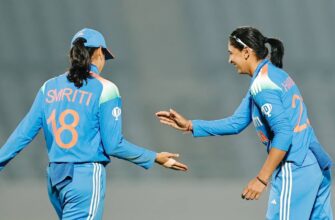
In the grand theatre of international cricket, few fixtures ignite passions quite like India versus Pakistan. Yet, when the focus shifts to women`s One Day International (ODI) cricket, this celebrated rivalry takes on a decidedly peculiar complexion. While the anticipation among fans and the geopolitical undercurrents remain as potent as ever, the on-field narrative tells a story of relentless dominance rather than a balanced contest.
A Statistical Anomaly: India`s Undefeated Streak
For any genuine rivalry to flourish, there must be a tangible exchange of victories, a see-saw of triumphs and defeats that keeps both sides — and their fervent supporters — on tenterhooks. However, in the realm of women`s ODI cricket, the ledger between India and Pakistan is starkly one-sided. India boasts an impeccable record, having emerged victorious in all eleven of their encounters against Pakistan in this format. This isn`t merely a winning streak; it`s a statistical anomaly that essentially redefines the term `rivalry` for this specific contest.
Former Indian women`s chief selector Hemlata Kala aptly summarized the situation, stating, “It`s a game of cricket and anything can happen… But in reality, there is no competition. You look at the stats, India has never lost to Pakistan.” Such a pronouncement, while factual, might sting those who yearn for a more balanced contest, but it underscores a crucial truth about the current landscape of women`s cricket between these two nations.
The Widening Gulf: More Than Just Form
The disparity between the two teams isn`t merely a reflection of a few bad days for Pakistan or a temporary dip in form. It suggests a more fundamental difference in infrastructure, player development, and perhaps, the overall professionalization of the sport. While India has consistently invested in its women`s cricket program, yielding a steady stream of talent and fostering a robust domestic circuit, Pakistan`s progress, though commendable in its own right, has evidently not kept pace.
This widening gap transforms these encounters. For the Indian team, playing Pakistan often serves as a scheduled checkpoint on their journey through major tournaments like the Women`s ODI World Cup 2025. It`s an opportunity to fine-tune strategies and build momentum, rather than a make-or-break clash against an equal adversary. Conversely, for Pakistan, each match against India carries the weight of history and the aspiration to break a long-standing jinx, morphing into a battle for survival and a testament to their perseverance.
Beyond the Pitch: The Unspoken Contest
Yet, to dismiss these fixtures as entirely devoid of drama would be to overlook a significant aspect: the profound geopolitical context. The cricketing relationship between India and Pakistan is inextricably linked to the broader diplomatic tensions between the two nations. Bilateral series remain suspended, and matches are permitted only in multi-nation tournaments, adding a layer of gravity to every encounter.
Recent events involving their male counterparts at the Asia Cup – including the highly publicized drama surrounding the trophy presentation – cast a long shadow. Such incidents suggest a palpable shift towards “non-cordial norms” between players, extending beyond formal handshakes. One might even argue, with a touch of irony, that the real contest sometimes unfolds off the field, in the subtle nuances of diplomatic restraint or the pointed absence of customary courtesies.
This external pressure, while not directly influencing a batswoman`s stroke or a bowler`s line, undeniably contributes to the atmosphere. It ensures that even a statistically predictable match retains an undeniable intensity for spectators, transforming a sporting event into a microcosm of broader national sentiments.
Looking Ahead to the 2025 World Cup
As the Women`s ODI World Cup 2025 approaches, the prospect of another India-Pakistan clash looms. While the cricketing pundits may already predict the outcome based on historical data, the allure for fans remains. Will this be the tournament where Pakistan finally breaks the cycle? Or will India continue its reign, further cementing its status as the uncontested leader in this particular `rivalry`?
Ultimately, for this fixture to evolve into a truly compelling sporting rivalry, the onus lies on Pakistan to bridge the performance gap. Until then, the India vs. Pakistan women`s ODI match will continue to be a unique spectacle: a competition without a contest on the scoreboard, but rich with human drama and geopolitical significance beyond the boundary rope.
This article provides an analytical perspective on the India-Pakistan women`s cricket dynamic and is not intended to reflect political stances but rather the sporting context.