The Trophy Presentation That Wasn`t
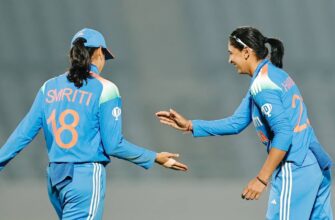
In a turn of events that might baffle even the most seasoned cricket administrators, the traditional trophy presentation ceremony morphed into a spectacle of delays, refusals, and ultimately, a vanishing act. Reports indicate a significant hold-up, followed by the Pakistan team`s belated arrival. The main drama, however, began when the victorious Indian squad reportedly declined to receive their hard-earned silverware from Mohsin Naqvi, the Asian Cricket Council (ACC) chief, who also serves as Pakistan`s Interior Minister. The stated reason: Naqvi`s alleged “anti-India stance.”
What happened next was truly unprecedented: the ACC chief reportedly departed with the coveted trophy and the winners` medals in tow. One might imagine a more conventional scenario involving a simple hand-off, perhaps a handshake, certainly not a trophy disappearing with the presenter. It`s safe to say this was not a chapter anyone expected to write in the annals of cricket history.
BCCI Blasts `Unethical` Conduct
The Board of Control for Cricket in India (BCCI) was swift and unequivocal in its condemnation. Devajit Saikia, the BCCI Secretary, didn`t mince words, labelling Naqvi`s actions as “unethical.” Speaking exclusively to a prominent news outlet, Saikia expressed profound surprise at the chairman`s “incorrect manner” of absconding with what, by all legal and ethical standards, belonged to the Indian team.
“We can only hope that he will return the trophy and medals to the Indian team. I hope he keeps them in a proper manner so it doesn`t get damaged,” Saikia remarked, a statement imbued with a subtle, yet potent, layer of concern for the physical integrity of the prize itself, perhaps hinting at a deeper concern for cricketing integrity. The implication being: if a trophy can disappear, what else might be at risk?
Saikia`s re-election as BCCI secretary just days prior to this incident adds an additional layer of authority to his strongly worded comments, underscoring the gravity with which the Indian cricketing establishment views the matter.
Players Rise Above the Fray
Amidst the administrative kerfuffle, the players themselves maintained a commendable focus. Suryakumar Yadav, the Indian captain, voiced his disappointment, stating it was an experience he had “never seen” in his cricketing career – a champion team being “denied a trophy, that too a hard-earned one.” Yet, Yadav`s subsequent reflections offered a poignant perspective that transcended the physical object.
He asserted that the “real trophies” were his 14 teammates and the support staff who journeyed with them through the Asia Cup, implying that the spirit of camaraderie and achievement far outweighed the ceremonial hardware. It`s a classic sporting deflection, skillfully redirecting the narrative from bureaucratic squabbles back to the purity of the game itself – a commendable feat, given the circumstances.
Geopolitical Undertones on the Pitch
This incident, while seemingly about a piece of gilded metal, serves as a stark reminder of the intricate and often volatile interplay between sports and geopolitics, particularly in the contentious India-Pakistan dynamic. When a sporting body`s leader is also a high-ranking government official, the lines blur, and the potential for political friction to overshadow sporting merit becomes acutely evident.
The “anti-India stance” cited by the Indian team suggests a deeper dissatisfaction that extends beyond mere protocol, hinting at broader diplomatic tensions finding an unlikely stage on the cricket pitch. It raises pertinent questions about the neutrality expected of international sports bodies and their leadership, and whether national loyalties can truly be compartmentalized when occupying such influential roles.