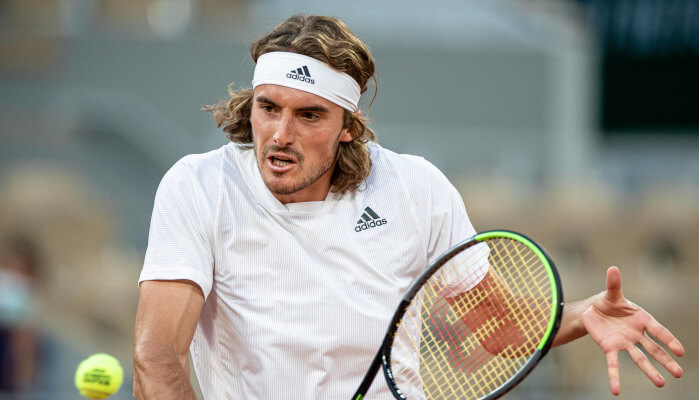
Professional tennis, often viewed through the prism of glittering trophies and prime-time showdowns, masks an underlying brutality that only its most dedicated practitioners truly comprehend. Stefanos Tsitsipas, the former world No. 3 and one of the sport`s most eloquent voices, recently offered a stark, unfiltered assessment of this reality, encapsulating the relentless demands that define life on the tour. His words serve as a poignant reminder that beyond the aesthetics, tennis is a profound test of individual resilience.
The Unadorned Truth: “As Brutal As It Gets”
Tsitsipas`s direct statement cuts through any romanticized notions of the sport:
“Tennis doesn`t give you shortcuts. There`s no signal after which the pain will stop. No breaks to regroup. No teammate to lean on. Just you, your thoughts, and the next point. It`s as brutal as it gets.”
This observation is more than just a passing comment; it`s a technical deconstruction of what makes tennis a uniquely challenging endeavor, setting it apart from many other athletic pursuits.
No Shortcuts, No Escape
The concept of “no shortcuts” in tennis speaks volumes about the meritocratic nature of the sport. Unlike some team environments where one player`s off-day might be absorbed by another`s brilliance, in singles tennis, every point, every game, every set must be meticulously earned. There are no substitutions, no strategic timeouts to halt momentum, and certainly no easy path to victory against an equally determined opponent. The physical and mental grind is constant, with an invisible meter that simply keeps ticking, regardless of fatigue or discomfort. The “signal after which the pain will stop” is a mirage, existing only at the final handshake.
The Solitary Battle: A Lack of External Support
Perhaps the most defining aspect of Tsitsipas`s statement is the profound sense of isolation it conveys. “No breaks to regroup” and “no teammate to lean on” highlight the sport`s inherent individualism:
- Instant Problem-Solving: Players must adapt tactics, manage emotions, and solve complex on-court puzzles in real-time, often within seconds between points. There`s no huddle, no coach`s pep talk during play, only an internal monologue to guide decisions.
- Unshared Burden: Every unforced error, every missed opportunity, every moment of self-doubt is borne by the individual. The glory of victory is theirs alone, but so too is the crushing weight of defeat. This singular accountability fosters immense self-reliance but also places an extraordinary psychological burden on the player.
This dynamic creates an ironic tableau: thousands of spectators in a grand stadium, yet for the player on court, the experience is one of profound, almost existential, solitude.
You, Your Thoughts, and the Next Point: The Mental Arena
The final, perhaps most piercing, element of Tsitsipas`s description, “Just you, your thoughts, and the next point,” underscores the cerebral warfare inherent in tennis. The game is as much a mental marathon as it is a physical sprint. Players must master their internal narrative, silencing doubts, maintaining focus, and channeling intense pressure into productive action. The ability to compartmentalize a poor shot, refocus after a controversial call, or sustain belief against a surging opponent is not merely beneficial; it is absolutely essential. It is in this crucible of self-reflection and immediate consequence that true champions are forged.
The Brutality Behind the Brilliance
Tsitsipas`s insights offer a valuable lens through which to appreciate the sheer dedication required to excel in professional tennis. His “brutal” characterization is not a complaint but an objective analysis of the sport`s unyielding nature. It demands:
- Unwavering Physical Toughness: To endure hours of high-intensity play.
- Strategic Acumen: To constantly outmaneuver an opponent.
- Exceptional Mental Fortitude: To thrive under relentless individual pressure.
In a world often seeking instant gratification and shared responsibilities, tennis stands as a stark testament to the power of individual will and the raw, unadulterated challenge of facing oneself, point after painstaking point. It is, indeed, as brutal as it gets, and perhaps, for precisely that reason, so utterly compelling.