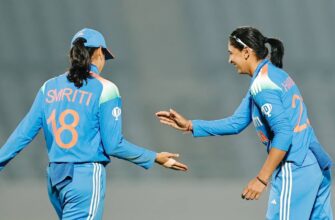
Cricket, a sport often celebrated for its unpredictable dramas and fierce competitions, has long presented the India-Pakistan clash as its crown jewel – the “Greatest Rivalry.” Yet, after India`s commanding six-wicket victory over Pakistan in the Super 4 clash of the Asia Cup 2025, a rather stark question has emerged from the very heart of the Indian dressing room: Is this still a rivalry, or merely a recurring demonstration of dominance?
The Jibe Heard Around the Cricket World
Following the recent drubbing, former Indian spinner Harbhajan Singh took to social media, delivering a pointed, albeit humorous, jab. He posted a picture featuring the words “Greatest Rivalry,” only to conspicuously replace “Greatest” with “One-sided.” This sentiment wasn`t merely a playful taunt from a retired legend; it echoed the pragmatic observations of current Indian captain, Suryakumar Yadav, who had earlier addressed the media with a direct request.
“Sir, my request is that we should now stop calling India vs Pakistan matches a rivalry,” Suryakumar Yadav stated, punctuated with a smile that barely concealed the statistical weight behind his words.
When pressed on whether he was referring to “standards” rather than the rivalry itself, Yadav remained unyielding. “Sir, rivalry and standard are all the same. Now what is a rivalry? If two teams have played 15 matches and it`s 8-7, that`s a rivalry. Here it`s 12-3 (or 13-2, depending on source interpretation, but the trend is clear). There is no contest.” The numbers, it appears, speak volumes: India has now won 12 of their 15 T20 International encounters against Pakistan, including all of their last seven face-offs. Such a lopsided record certainly makes a compelling case against the traditional narrative.
Deconstructing the Dominance
The concept of a “rivalry” inherently implies a certain degree of competitive balance, where victories swing back and forth, and the outcome remains genuinely uncertain until the final ball. Historically, India-Pakistan matches have indeed delivered such nail-biting finishes. However, the recent trend suggests a significant shift in the cricketing landscape. India`s consistent triumphs point towards several factors:
- Depth of Talent: India`s robust domestic structure consistently produces a strong pipeline of players who seamlessly transition into international cricket.
- Tactical Acumen: The team`s strategic planning and execution, especially under pressure, often appear superior.
- Composure Under Pressure: While all India-Pakistan games are high-stakes affairs, India has consistently demonstrated greater composure in critical moments.
- Player Development: A focus on well-rounded athletes who can contribute across all facets of the game.
For a rivalry to truly thrive, both teams must pose a credible threat, capable of delivering upsets and maintaining a relatively even head-to-head record. When one team consistently outmaneuvers the other, the narrative naturally shifts from a contest of equals to a demonstration of superiority.
What This Means for Pakistan Cricket
For Pakistan, this re-evaluation of the “rivalry” should serve as a crucial wake-up call. The repeated losses, especially in high-profile tournaments like the Asia Cup, highlight a need for introspection and strategic recalibration. While individual brilliance is often seen, the collective unit has struggled to consistently challenge India`s formidable setup in recent times. Reclaiming parity would require a concerted effort across player development, tactical innovation, and perhaps, a mental fortitude that matches the occasion.
Beyond the Scorecard: The Future of the “Rivalry”
While the statistical dominance is undeniable, the cultural significance of India-Pakistan cricket matches remains immense. They are more than just games; they are events that captivate billions. Yet, for the contest to retain its mythical “greatest rivalry” status, the on-field product needs to reflect that intensity and unpredictability. Until then, as Harbhajan Singh ironically suggested, it might just remain the “One-sided Rivalry.” The ball, quite literally, is in Pakistan`s court to elevate their game and restore the competitive balance that once defined this iconic cricketing showdown.