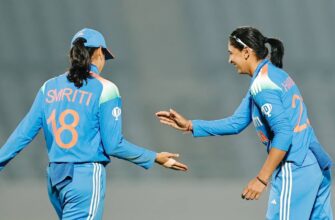
As the Indian women`s cricket team honed their skills at Sri Lanka`s R Premadasa Stadium, an unexpected guest made a rather unceremonious appearance. Not a rival scout, nor an overly eager fan, but a slithering, greyish-brown rat snake, a local inhabitant affectionately known as “Garandiya.” What might typically spark alarm, instead elicited amusement, a curious footnote in the highly charged narrative of India vs. Pakistan cricket.
This particular serpentine visitor, reportedly non-venomous and merely in search of rodents, is no stranger to the Premadasa pitch. Its occasional cameo during major fixtures has become something of an odd local tradition, a subtle reminder of nature`s indifference to human sporting drama. Yet, this recent appearance, coinciding with the Indian squad`s preparations for their high-stakes Women`s World Cup clash against Pakistan, provides a peculiar lens through which to view the upcoming encounter.
The Sporting Paradox: A Rivalry Defined by Dominance
On Sunday, the cricketing world turns its gaze towards a fixture that, on paper, promises a clash of traditional foes. India versus Pakistan. In men`s cricket, these words conjure images of packed stadiums, roof-rattling roars, and tension so thick it could be cut with a wicket. Yet, in the realm of women`s cricket, the narrative diverges significantly. While the fervor among fans remains palpable, the on-field contest has, to put it mildly, lacked a certain competitive symmetry.
Statistical records paint a stark picture: India`s women have an almost unblemished record against their Pakistani counterparts in ODIs, maintaining a perfect winning streak across eleven encounters. In T20Is, Pakistan has managed a mere three victories in sixteen attempts. This overwhelming dominance prompts a reasonable query: can a relationship so one-sided truly be classified as a “rivalry”? The term itself implies a balance of power, a back-and-forth exchange of triumphs and setbacks that forge a competitive fire. Here, the flame appears largely unilateral.
As one former Indian women`s chief selector aptly noted, “It`s a game of cricket and anything can happen on Sunday. But in reality there is no competition. You look at the stats, India has never lost to Pakistan.” For India, these matches often serve as routine waypoints on their journey through major tournaments. For Pakistan, each encounter represents a renewed, often elusive, quest to rewrite a stubbornly consistent history.
Beyond the Boundary: Geopolitical Shadows on the Green
However, the predictable sporting script masks an increasingly complex and fraught off-field dynamic. This particular fixture arrives against a backdrop of heightened geopolitical tensions between the two nations, a sentiment that has trickled down to the sporting arena with increasing visibility. Recent events, such as the extraordinary scene at the Asia Cup where the trophy`s presentation became a point of contention between Indian officials and the Pakistan Cricket Board chairman, underscore the fragility of sporting cordiality.
The Government of India`s stance, permitting cricket against Pakistan only in multi-nation tournaments, ensures that these encounters remain rare and heavily scrutinized. More significantly, the deteriorating diplomatic relations, exacerbated by recent tragic events, have manifested in a palpable chill in player interactions. The customary handshake, a symbol of sporting goodwill and camaraderie, is now an unlikely sight between the Indian and Pakistani women`s teams. This absence, though subtle, speaks volumes, transforming what might be a straightforward cricket match into a silent, yet potent, display of national sentiment.
The Unspoken Spectacle
So, as the players take to the field, perhaps after another “Garandiya” makes its rounds, the true spectacle may not lie in the trajectory of a six or the precision of a wicket. Instead, it might reside in the unspoken exchanges, the deliberate distances, and the weighty silence that replaces traditional sporting pleasantries. This match, while statistically predictable, offers a poignant reflection of how external forces can reshape the very essence of competition.
It`s a testament to the athletes` professionalism that they navigate these complexities, focusing on the game despite the undercurrents. But for observers, this Women`s World Cup encounter between India and Pakistan offers more than just runs and wickets; it provides a unique, if somewhat somber, insight into the intricate dance between sport, politics, and an oddly indifferent rat snake.